The AI-Native Advantage: Why This Singapore Start-up is Currently the Most Compelling Growth Story in Asian Tech


[The content of this article has been produced by our advertising partner.]

The recent rout in software stocks has felt like a final reckoning. As Anthropic’s industry-specific plug-ins dismantle traditional workflows, the “Software Apocalypse” is no longer a hyperbolic headline—it’s a market filter. For legacy SaaS, the AI era was promised as a tailwind; instead, for many, it has become an existential wall.

In the shadow of these falling multiples, a new class of “AI-resilient” companies is emerging. These are the players who anticipated the shift and evolved early enough to become AI-native.
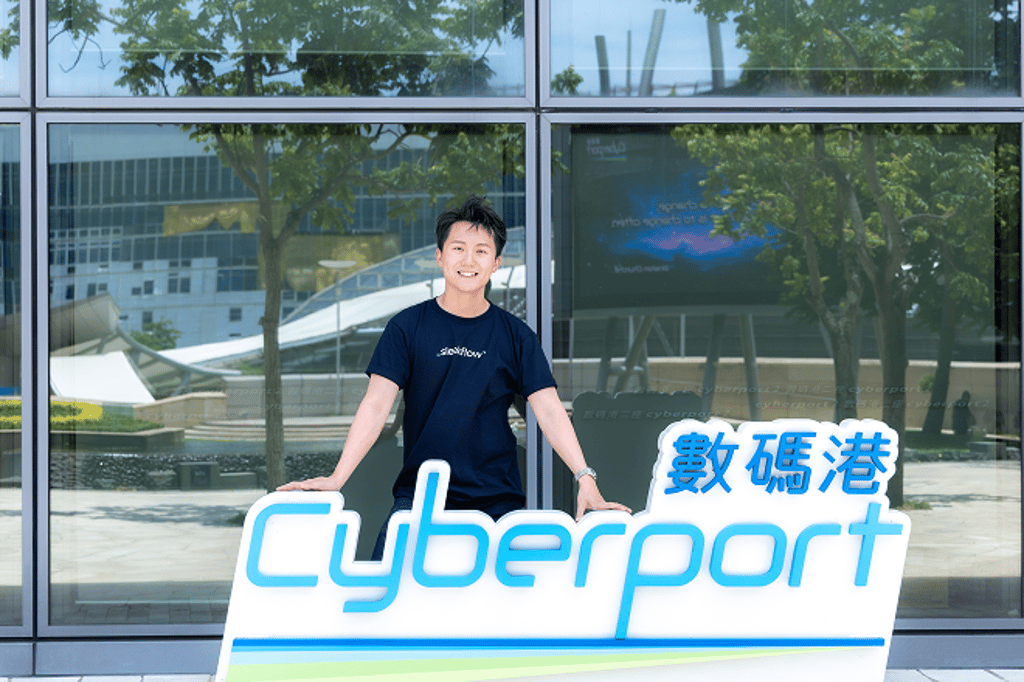
“The market is moving past the era of static tools,” says Henson Tsai, Founder and CEO of SleekFlow. “We saw the ceiling for traditional SaaS early. The challenge wasn’t to stop being a software company, but to ensure our software functioned as the autonomous nervous system for an AI-native engine. We didn’t just add AI; we transformed into it.”
Henson Tsai, Founder and CEO of SleekFlow, is leading the company's high-velocity pivot from a messaging tool to an AI-native revenue engine.
Henson Tsai, Founder and CEO of SleekFlow, is leading the company’s high-velocity pivot from a messaging tool to an AI-native revenue engine.

SleekFlow’s defensibility—its “moat”—is no longer just about connectivity, but a proprietary “self-healing” knowledge base. Unlike standard AI wrappers, this technology enables companies to create a persistent, ever-updating “internal Wikipedia.” By processing millions of messages and customer profiles daily, the AI learns in real-time across multiple platforms and third-party integrations, forming a 360-degree “mastermind” that understands each customer’s history. It doesn’t just store data; it detects and fixes its own knowledge gaps autonomously.

“The transition to SleekFlow’s AI felt like flicking a switch; the ‘magic’ happened almost overnight,“noted Kenneth She, Chief Transformation Officer for HKBN, the telecom giant that deployed AgentFlow earlier this year.” It hasn’t just added efficiency— it’s changed our entire growth trajectory.”
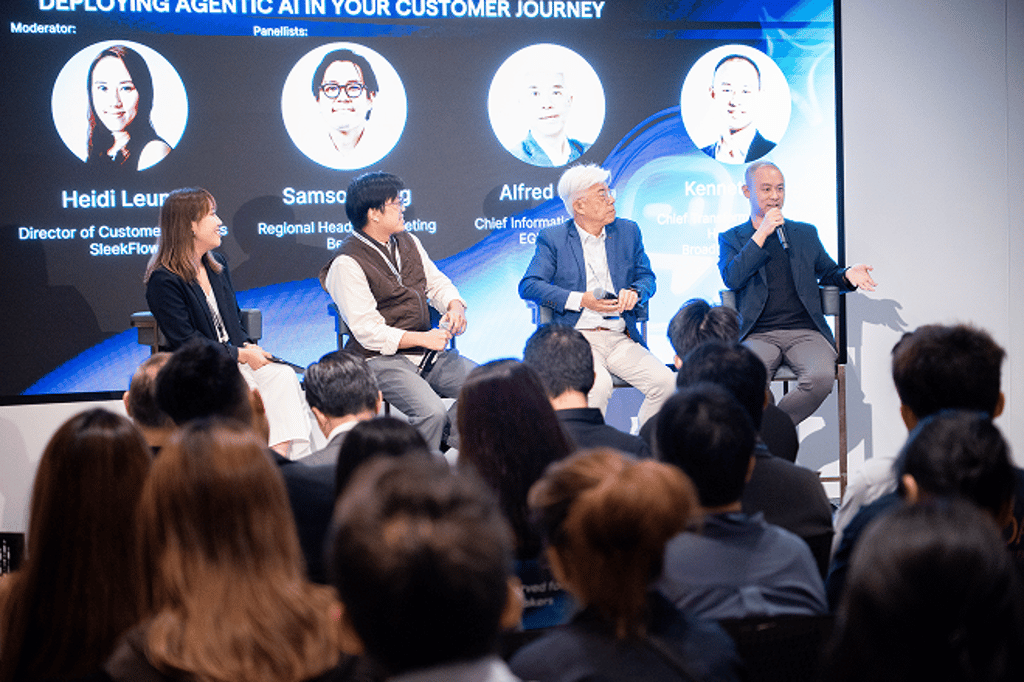
HKBN attended the AgentFlow launch event in July 2025 as a trusted SleekFlow customer.
The markets are already validating this evolution. Since SleekFlow launched its AgentFlow pivot in July 2025 — a sophisticated suite that allows businesses to build and deploy custom AI agents—the traction has been a signal in the noise. In Q4 alone, 76% of newly acquired customers bypassed basic tiers for AI plans, with many upgrading their usage tiers within 90 days. This demand fueled a 64% quarter-on-quarter growth in new logo acquisition. Revenue grew 25% in a single quarter, accelerated by a potent Product-Led Growth (PLG) momentum; self-serve rates nearly doubled since the AgentFlow era began. The numbers point to a clear market appetite for platforms that let companies build and deploy their own AI agents.

SleekFlow is now aggressively building out what it calls a “digital workforce” that companies can hire instantly. Apart from Inbound and Outbound agents driving payments and completing third-party bookings directly within the messaging interface, the roadmap also includes AI Data Analysts that autonomously identify gaps in pricing and support, alongside Retention Agents designed to monitor customers’ health without human intervention. These agents are moving beyond “chatting” to “doing”. They handle the entire sales funnel autonomously.
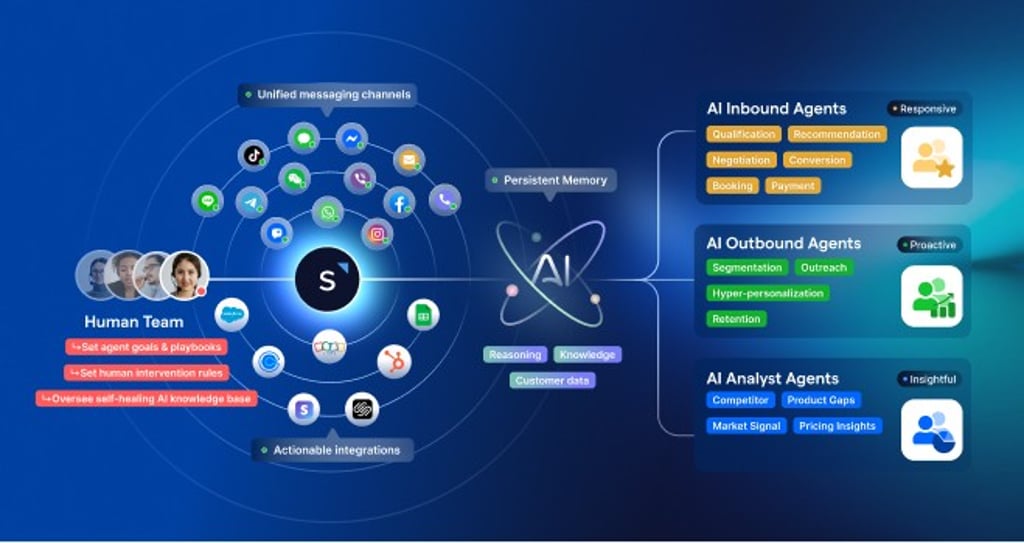
SleekFlow’s Agentic Commerce architecture combines a self-healing knowledge base with specialized inbound, outbound agents, and AI data analysts to autonomously drive revenue across global messaging channels.

With a global footprint spanning 80 countries and a technical engine led by a Silicon Valley veteran and former CTO of LinkedIn China, SleekFlow is positioning itself as the “ultrafuel” for the SME sector. For investors looking for a hedge against the software crash, the thesis is clear: the winners of 2026 won’t be those who adopted AI, but those who were rebuilt by it.

“By the end of 2026,” Tsai notes, “we expect to more than double our revenue year-over-year.” In a graveyard of legacy software, that isn’t just growth — it’s an entirely new category of resilience.

  • Related Posts

    Hong Kong ignites next wave of global innovation as Start-up Express 2026 opens for application

    [The content of this article has been produced by our advertising partner.] Hong Kong’s trade promotion body has opened applications for the 2026 edition of its Start-up Express programme, as…

    Continue reading
    Huawei targets global comeback with Mate 80 Pro smartphone, new smartwatch

    Huawei Technologies is aiming for a major international comeback, with the overseas release of its latest flagship smartphone, the Mate 80 Pro, alongside a new smartwatch and the addition of…

    Continue reading

    Leave a Reply

    Your email address will not be published. Required fields are marked *